


Spotlight Interview
Caitlin and Clarinda, Founders of Not Just Patients
At PiCC United, we are proud to feature an inspiring interview with Caitlin and Clarinda, the founders of the Not Just Patients podcast. We chose to highlight their voices because they represent a new generation of unique and influential patient advocates dedicated to advancing meaningful patient involvement worldwide.
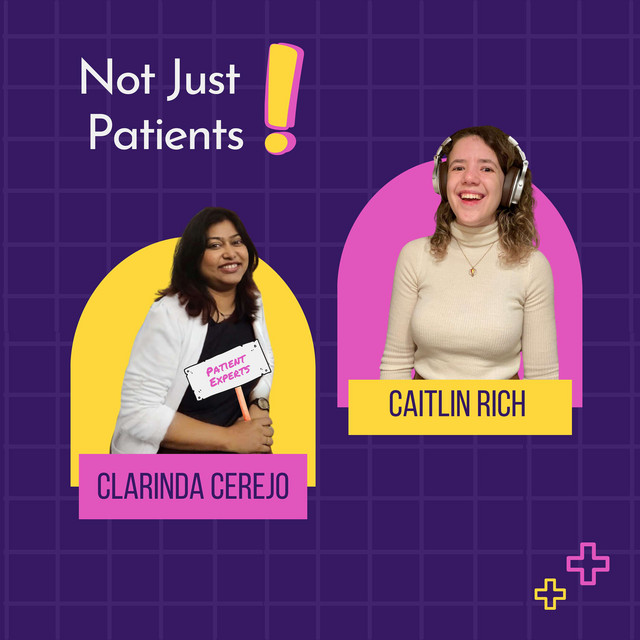
Through their work, they challenge traditional healthcare narratives and amplify the importance of lived experience in shaping research, policy, and practice. Their podcast serves as a global platform for dialogue, learning, and collaboration—demonstrating that patients are not merely participants in healthcare, but essential partners in driving innovation and change.
This interview explores their journey, insights, and vision for a more inclusive, transparent, and patient-aligned healthcare ecosystem.
Read the full interview and be inspired by their story.
1. What inspired you to start the Not Just Patients podcast?
Was there a particular moment or experience that made you feel this conversation needed to exist?
Clarinda: It was shortly after I had completed the EUPATI Patient Expert Training Programme. I was pumped up and inspired by all that I had learnt but at the same time felt troubled by the fact that this knowledge about the value of patient engagement is not widely accessible.
As the first EUPATI Fellow in India, and one of very few from Asia in my cohort, I felt this knowledge gap all the more starkly.

I felt compelled to do more and began thinking about what that next step should be. I had met Caitlin briefly at the graduation of the training programme and felt that we had a similar way of thinking and speaking up about issues. I love having conversations, so I thought that a podcast would be the perfect way to continue the learning and take it further out into the world. On an impulse, I asked Caitlin if she would join me. Incidentally and serendipitously, she had also been mulling over how to build on and share learnings from the EUPATI programme with the wider healthcare community.
That began a journey of over 2.5 years of conversations that break barriers to meaningful patient involvement in healthcare.
2. Through your conversations with guests, what have you learned about what good patient involvement really looks like in practice?
Are there any examples that stayed with you?
Through our podcast conversations, there are some key emerging themes around what ‘good’ patient involvement looks like:
Involve patients early. Don’t bring in patients at the last moment as a ‘tick-box’ exercise to validate projects that can no longer be changed. True patient involvement includes patients in the whole process, from defining the unmet needs, to setting objectives, to co-creating the plan and reviewing the outputs.
We’ve heard amazing examples about the impact this can have in practice across the healthcare system: Robert Joyce brought value as an Embedded Patient Researcher on a research team for a multiple sclerosis clinical trial, Urvashi Prasad spoke about how patient involvement can transform policymaking, and Emily Reuben OBE provided examples of patient involvement influencing reimbursement decisions and access to care.
Give patients an equal seat at the table. Patients are experts in lived experience, providing invaluable insights that drive real-world adoption of health interventions, care pathways, and policies. Their expertise holds weight whether they are in a room with a clinician, talking about their own health (shared decision-making), or in higher-impact settings such as at academic conferences or among policymakers.
Compensate patients fairly. Patients should be reimbursed for their valuable time and expertise, as much as any other stakeholder should. Expecting patients to volunteer their time for free is unfair, disrespectful, and often inaccessible, especially for people navigating illness.
Ensure diverse representation. In our conversation with Professor Lara Bloom, we discussed at length the need for diversity, equity, and inclusion to ensure representation of all members of a patient community, no matter the race, gender, age, or sexual orientation. She emphasised that while one patient is able to share invaluable lived experience, they are only able to speak for themselves rather than the wider community. The solution is to involve a diverse cohort of patients in activities, or a representative of a patient organisation who has close contact with the wider community.
Ensure accessibility. Patients with chronic conditions, illnesses, or disabilities may of course require reasonable adjustments in order to participate in healthcare projects. It is also important to ensure that patients are equipped with the skills and information required to meaningfully contribute to conversations. One of the aims of our podcast is to help patients feel informed and empowered to get involved in patient engagement activities across the healthcare ecosystem, through accessible and easy-to-understand conversations.
3. Have there been any podcast episodes or themes that surprised you or changed the way you think about patient engagement?
We encourage our guests to share their honest perspectives, which may occasionally spark debate on our podcast.
We’ve had some illuminating perspectives on the terms ‘patient centricity’ and ‘patient centred’. In our episode with Maya Zlatanova, she shared that she doesn’t like the term ‘patient-centred’ in the context of clinical trials, because it implies putting the patient need at the centre of the ecosystem, potentially at the cost of the science, clinical outcomes, reimbursement economics, or other factors that are all equally important and need to work together for the success of a health intervention.
She proposed the term ‘patient-aligned’ as a more suitable alternative, implying that clinical trials should consider patients as equal stakeholders and consider their needs just as they would consider all other clinical, technical, and economic factors.
Conversely, in a recent episode on patient-centred outcomes measures, Jennifer Bright argued that healthcare has always been and always should be about the patient, and that the use of ‘patient-centred’ serves as a reminder to everyone involved that the patient is the focus of the whole ecosystem.
These independent conversations were interesting for us, because even after more than a decade of work around patient centricity and patient engagement in the healthcare industry, there are no universally accepted definitions.
Another contentious issue we’ve debated in an episode with Emma Sutcliffe is whether lived experience should be a prerequisite for holding professional patient engagement roles in industry. This is an issue that comes up very often in the context of professionalizing patient engagement and triggers impassioned arguments for all involved.
While there can be no single resolution to such contentious issues, exploring topics from different angles and offering a platform for opposing views to be shared respectfully is a great way to broaden perspectives and move the conversation forward productively.

4. For organisations, researchers, or industry partners who genuinely want to involve patients better — what is one thing they should start doing differently?
Patient engagement should be baked into processes and systems from the beginning. When patients are invited to participate towards the end of a process, to share feedback on a near-final output, it increases the chances of getting things wrong and having to redo them.
Holistic and ongoing patient involvement ensures that the output is clear, relevant, and valuable to the patient community from the outset.
For each project, stakeholders should think about how patients and caregivers can be involved at each stage, understand their key challenges to getting involved, and co-create solutions together.
Not Just Patients has podcast episodes with a wide range of stakeholders, highlighting the value of patient involvement and sharing advice on how to overcome barriers. Stakeholders can find episodes relevant to their sector or area of work and listen to them for inspiration, ideas, and tangible examples.
.
5. Looking ahead, what are you hoping the Not Just Patients podcast will contribute to the patient involvement landscape in the coming years?
We hope that Not Just Patients will continue to expand its reach globally so that more and more stakeholders globally come to learn about the power of patient involvement and drive change at their level of influence.
This could mean that in all corners of the world, through listening to our podcast:
- More healthcare providers begin to practice shared decision-making
- More researchers bring patients onto their teams as embedded research partners
- More pharma and biotech companies create dedicated patient engagement roles and teams and incorporate patient perspectives throughout their processes
- More health policymakers engage with patients early enough to ensure that policies are designed with patients in mind
- More patients feel empowered to ask the right questions to their doctors and to get involved in healthcare at various levels, according to their comfort and ability
- Healthcare globally becomes a more empathetic space for all stakeholders, especially patients
We look forward to featuring an increasingly diverse set of guests and covering a wide range of topics that contribute to our collective knowledge on patient involvement. Through conversations with diverse stakeholders, we hope to highlight equity gaps and draw comparisons in patient engagement practices across different regions globally, so that true and meaningful patient involvement becomes the norm in all healthcare settings around the world.
We are delighted that Caitlin and Clarinda took the time to share their insights and experiences in this interview with PiCC United. Their dedication to advancing meaningful patient involvement continues to inspire change across the global healthcare landscape.
We extend our sincere thanks for their openness, passion, and commitment to amplifying patient voices worldwide.
You can follow their work and listen to their inspiring conversations here Apple Podcasts