

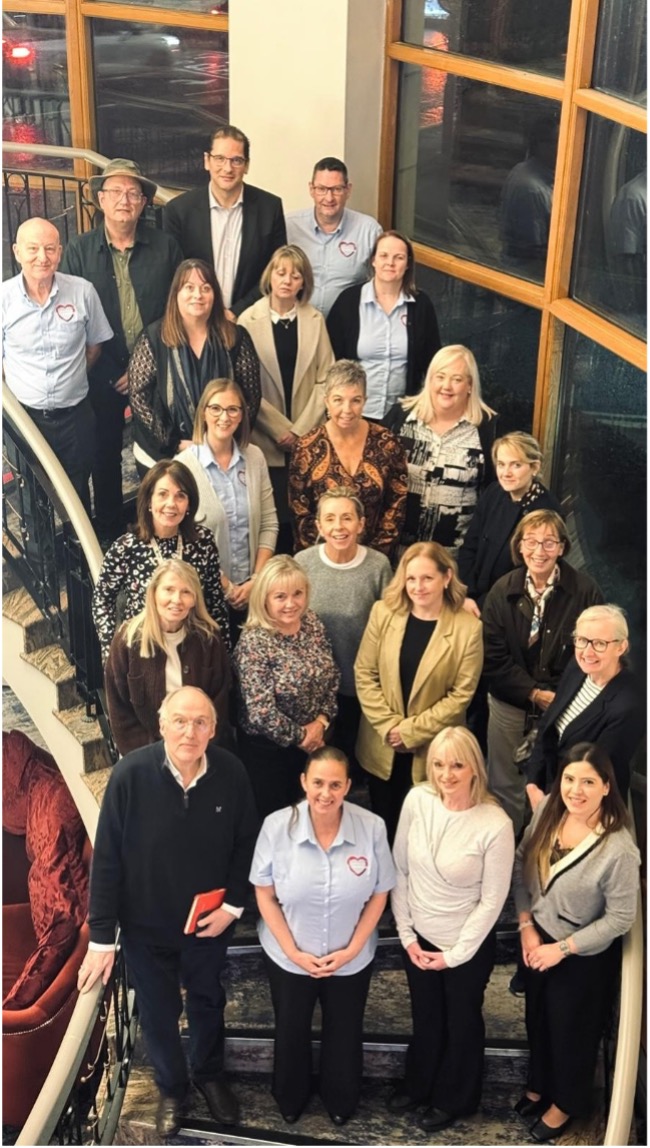
Northern Ireland, UK
Welcome Home Heart Failure roundtable with patients, carers, and healthcare teams.
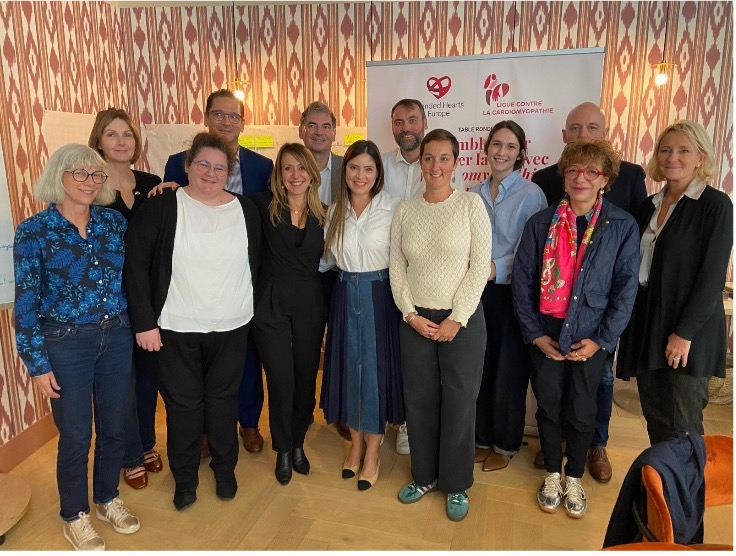
Paris, France
Welcome Home HCM roundtable with patients and clinicians.
Strengthening Patient Communities Across Europe
Across Europe, many people living with cardiovascular disease leave the hospital with more questions than answers. The moment of diagnosis can be overwhelming, and the journey that follows is often marked by uncertainty, fragmented information, and a sense of isolation. Clinical care is essential — but it cannot always address every aspect of a patient’s experience. This is where peer support plays an important complementary role.
At Mended Hearts Europe, we often describe peer support as filling the “human gap” between medical care and lived experience. It provides reassurance, connection, and practical understanding at a time when patients and families need it most
But while the value of peer support is widely recognised, the way it is implemented matters just as much as the intention behind it. Our experience has shown that peer support cannot rely solely on goodwill or informal structures. To be safe, effective, and scalable, it needs to be thoughtfully designed. We do not build informal support groups. We build structured, co-designed, system-aware peer-support models.
This means working closely with patients, caregivers, and healthcare professionals from the outset to ensure that peer support complements — rather than competes with — clinical care. It means defining roles clearly, establishing boundaries, investing in volunteer training, and creating mechanisms to monitor and evaluate impact. Most importantly, it means embedding peer support within existing healthcare pathways, so that it becomes part of the system rather than an external add-on.
This approach has guided our work across Europe, including in France and Northern Ireland, where we are currently implementing the Welcome Home programme.
In France, the context is one of strong, well-structured healthcare pathways, including specialist networks and Therapeutic Patient Education programmes. The challenge was not to demonstrate the value of peer support, but to define how it could be integrated without duplicating existing structures.
Through collaboration with the Ligue Contre la Cardiomyopathie, the focus has been on alignment — ensuring that peer support fits within established pathways such as Cardiogen, and is recognised as a complementary, legitimate part of care.
The key lesson from this work has been clear: integration is everything. When peer support is aligned with the system, it is embraced; when it operates in parallel, it struggles to take root
Northern Ireland presents a very different context. Here, the healthcare system faces workforce shortages, diagnostic delays, and regional inequities. In this setting, the challenge is not complexity, but capacity. In partnership with Heart Failure Warriors Northern Ireland, we brought together patients, carers, nurses, and clinicians through a multi-stakeholder roundtable to co-design a locally adapted Welcome Home model for heart failure.
What emerged clearly is that the period following diagnosis and early discharge is highly vulnerable. Patients feel overwhelmed, carers carry significant responsibility, and clinicians are often constrained by time. Peer support, in this context, is not an optional addition — it is a practical complement to care.
The identification of the Southern Health and Social Care Trust as a pilot site reflects a deliberate approach: start where readiness and engagement already exist, and build from there. The key lesson here is that co-design accelerates adoption. When stakeholders are involved from the beginning, implementation becomes more feasible and sustainable.
Across both contexts, several principles have consistently emerged.
First, co-design is non-negotiable. Peer support must be shaped with those who will use it and those who will work alongside it.
Second, alignment with healthcare systems is essential. Peer support cannot sit beside the system — it must sit within it.
Third, volunteer training matters more than is often assumed. Empathy is fundamental, but so are boundaries, role clarity, and ongoing support.
Fourth, impact must be measured. Not only to demonstrate value, but to continuously improve the model.
And finally, scalability must be considered from the outset. If a model only works in one setting, its impact will remain limited.
Importantly, peer support does not exist in isolation. It is part of a broader ecosystem. Over the past year, we have developed multilingual educational resources across a wide range of cardiovascular conditions and risk factors, produced in six languages and disseminated both digitally and through healthcare settings. We have also worked to increase visibility through awareness campaigns, generating significant engagement across Europe.
These efforts are interconnected: education builds understanding, visibility builds awareness, and peer support builds confidence. Together, they contribute to stronger, more resilient patient communities.
At its core, this work is about shifting the role of patients — from passive recipients of care to active participants in their own journey and, increasingly, in shaping the systems around them.
We are still learning. Each country, each healthcare system, and each patient community brings new insights and challenges. But one thing is clear: patient communities are not built by chance. They are built through structure, trust, and collaboration — and when these elements come together, peer support can become a powerful force for more connected, confident, and resilient patients.
Learn more at www.mendedheartseurope.org or contact us at mheurope@mendedhearts.org.